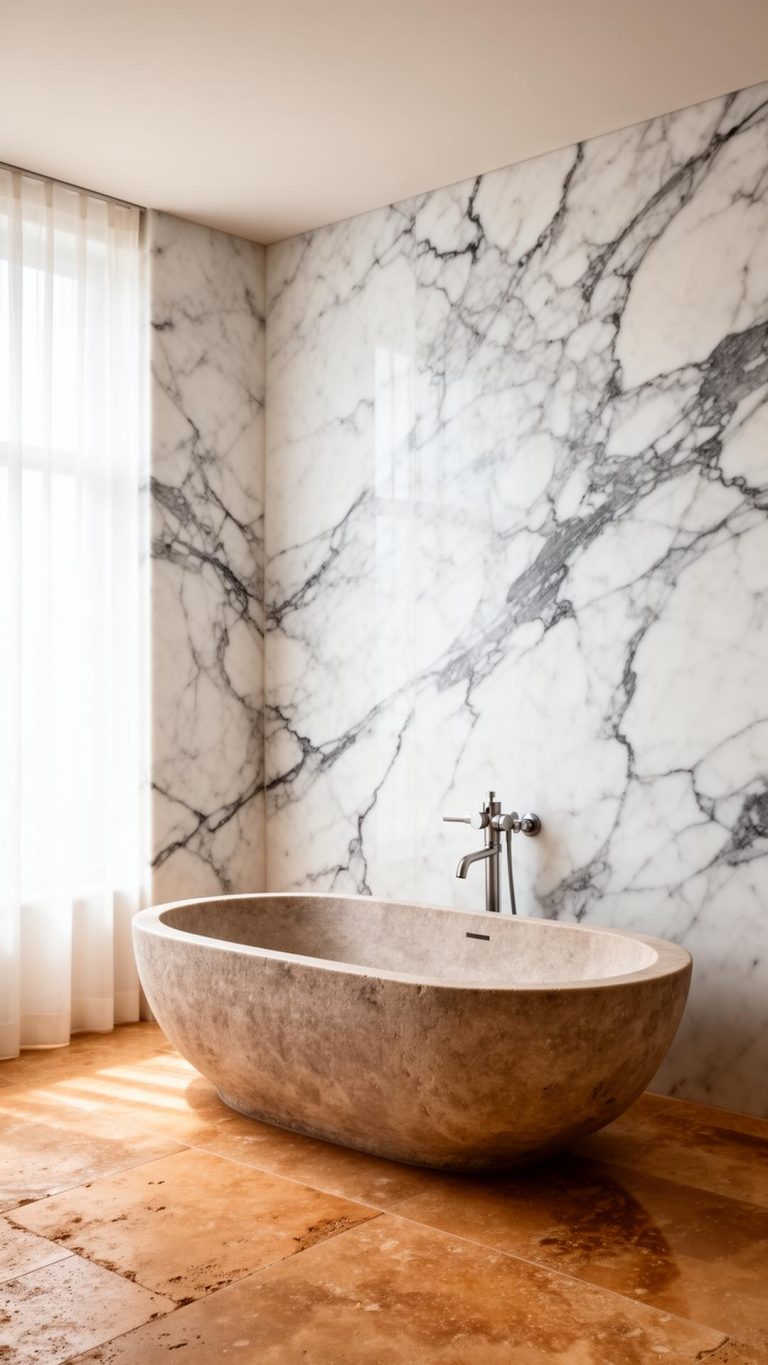
Calacatta and Carrara are often discussed interchangeably, and the conflation does both stones a disservice. Carrara is the quieter cousin: a soft, cloudy grey on white, with feathered veining that produces an almost atmospheric surface. It is the marble of antiquity — Michelangelo’s David, the Pantheon’s interior — and it brings that kind of restraint to a contemporary room.
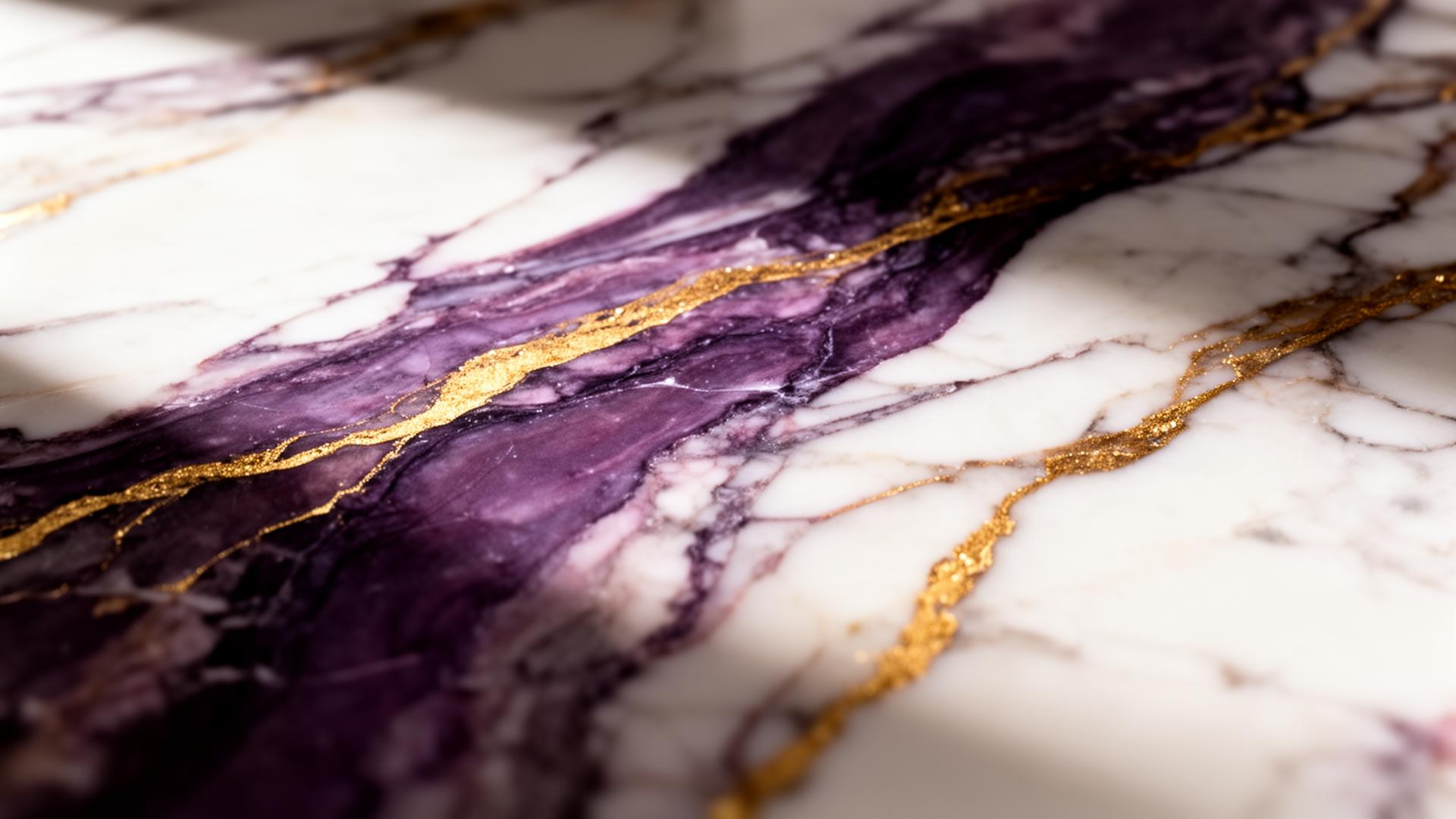
Calacatta is rarer, more dramatic, and considerably more expensive. Its veining is bold, painterly, often gold-toned, and it announces itself in a way Carrara never does. A Calacatta island is a centrepiece; a Carrara island is a surface.
When Carrara Wins
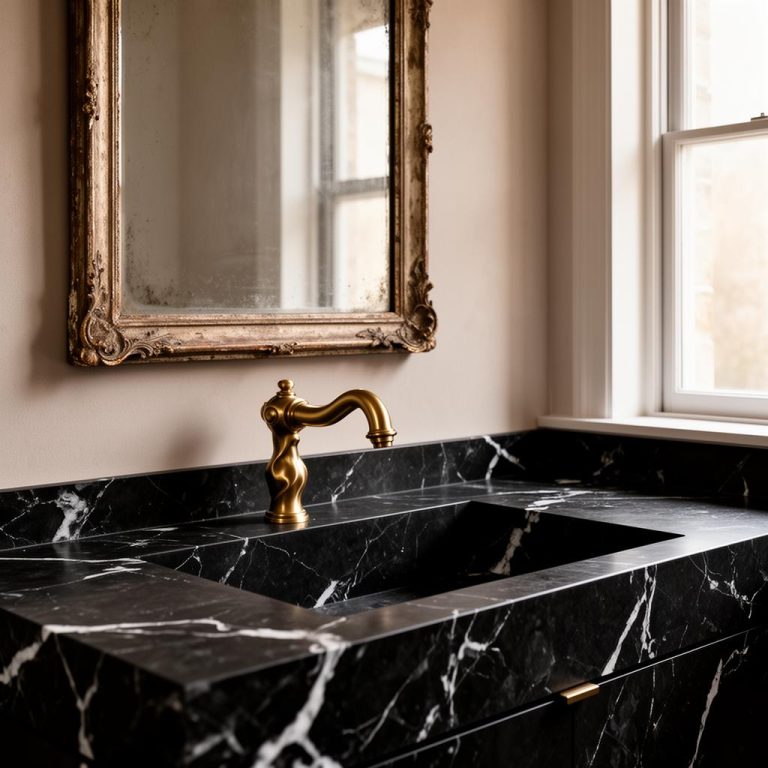
Carrara excels in rooms where the marble should support, not lead. Bathrooms with rich joinery, kitchens with strong lighting fixtures, fireplaces in heavily layered living rooms — all benefit from Carrara’s softness.
When Calacatta Wins
Choose Calacatta when the room is otherwise quiet: simple cabinetry, neutral walls, restrained lighting. The stone needs space to perform.
Frequently asked questions.
- What is the main difference between Calacatta and Carrara marble?
- Calacatta has bold, dramatic veining u2014 typically gold or grey tones u2014 on a bright white ground. Carrara has softer, more atmospheric grey veining on an off-white ground. Calacatta is rarer, more expensive, and announces itself in a room. Carrara is quieter and supports other design elements rather than leading them.
- Which is more expensive, Calacatta or Carrara?
- Calacatta is significantly more expensive u2014 sometimes three to five times the price per square metre depending on the specific variety. Its relative rarity and more dramatic veining command a premium. Carrara is one of the most widely quarried marbles in the world and is available at a broader range of price points.
- Can you use Carrara marble in a kitchen?
- Yes. Carrara is a popular kitchen marble, particularly for backsplashes and countertops in rooms where the stone should support rather than dominate. It pairs well with strong cabinetry, dramatic lighting fixtures, and layered material palettes. It requires the same care and sealing as all marble.
- Is Calacatta marble hard to maintain?
- Calacatta requires standard marble maintenance u2014 regular sealing, prompt cleaning of acidic spills, and avoiding abrasive cleaners. The polished finish common on Calacatta shows etching more readily than honed surfaces. Many designers recommend a honed finish for high-use Calacatta surfaces to reduce visible wear.