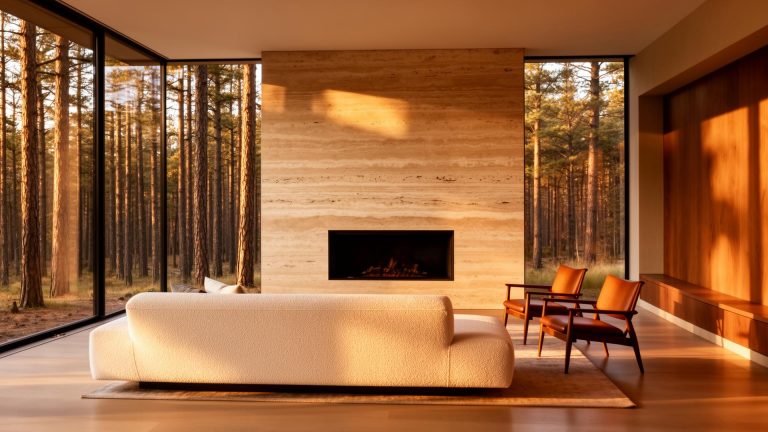
The bedroom is the easiest room in a house to over-design. It asks for very little — a bed, somewhere to put a glass of water, a wardrobe — and rewards almost nothing more.
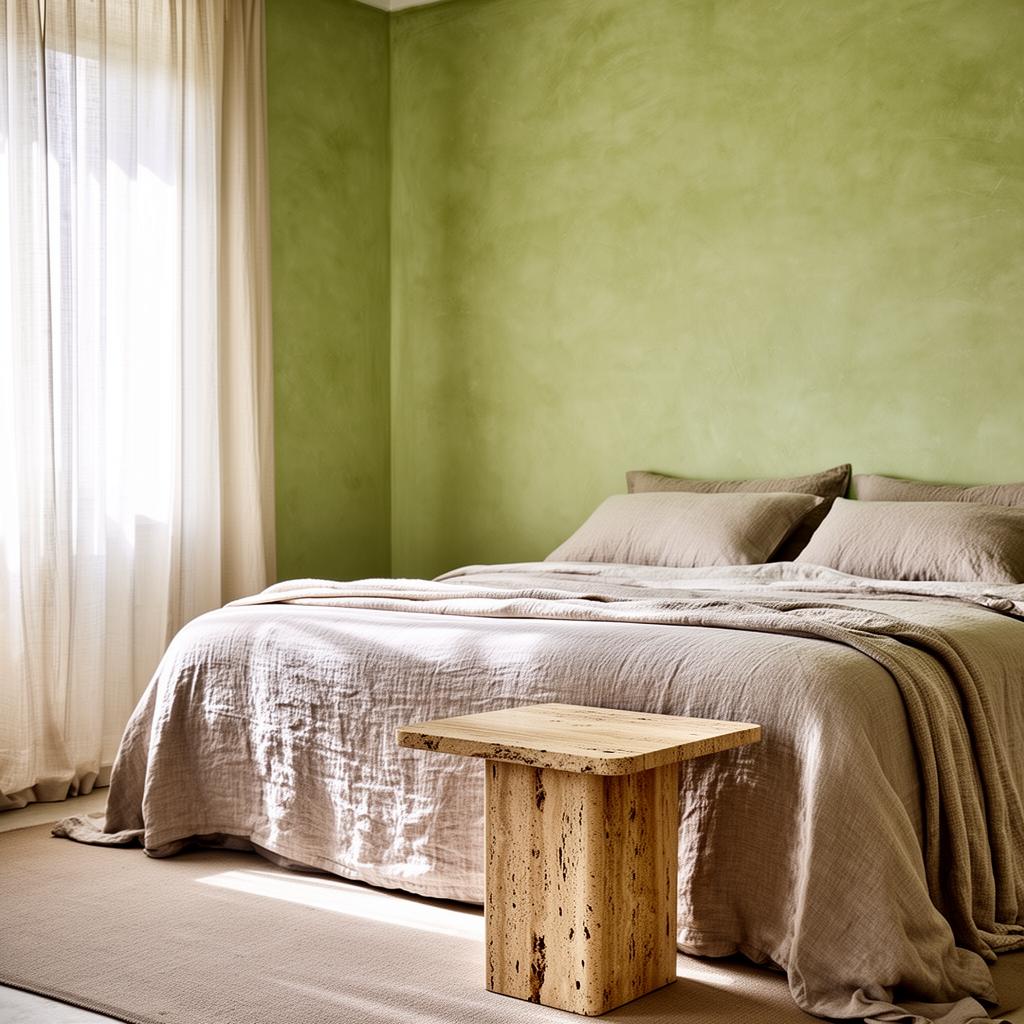
The bedrooms we return to are the ones where the designer trusted that. A limewashed wall, a linen-dressed bed, a single travertine piece doing the work of side table and sculpture both. Morning light, undisturbed.
The Bed as Architecture
In a minimally furnished bedroom, the bed is the room’s primary architectural element. Its proportion relative to the floor area, its height, its relationship to the windows — these decisions define the room more than any finish or material choice. A bed that is too high reads as a stage set. A bed that is too low reads as a mattress on a frame.
The beds that work in these rooms are simple: a platform in timber or stone, a linen-wrapped mattress, no headboard or a headboard that reads as part of the wall rather than a separate piece of furniture. The goal is for the bed to feel settled — as though it arrived before everything else and the room was arranged around it.
The Stone Element
Every considered bedroom benefits from at least one piece in stone. Not necessarily a large piece — a small travertine side table, a stone lamp base, a bedside tray cut from a marble offcut — but something that brings geological weight into a room otherwise composed of soft materials.
The contrast between linen and stone is one of the most satisfying in domestic interiors. Both materials improve with age. Both carry a quality of naturalness — of having come from somewhere specific — that manufactured materials cannot replicate. Together, they produce a room that reads as honest rather than styled, and that continues to reward occupancy in a way that designed rooms rarely do.
On Curtains and Darkness
The bedroom that sleeps well is the bedroom that can achieve complete darkness. Linen curtains, however beautiful in daylight, are insufficient for this. The solution is a linen curtain over a blackout blind — the blind does the functional work, the linen provides the aesthetic character, and the combination allows the window to read differently depending on the time of day.
Curtains in a bedroom should be floor-length and hung from a rail set as close to the ceiling as possible. This extends the apparent height of the window and, when drawn, makes the wall of fabric feel architectural rather than domestic.
Eliminating the Unnecessary
The final step in designing a considered bedroom is the removal of everything that does not earn its place. This is harder than it sounds. The chair in the corner that is never sat in. The rug that is slightly too small. The pair of bedside lamps that are slightly too large. The artwork that was chosen because the wall needed something.
The bedrooms worth publishing are those where every remaining object is there because its absence would leave a specific, articulable gap. Not a decorative gap — a functional or spatial one. That discipline is available to any budget. It costs nothing except the willingness to leave things out.