A marble kitchen is, above all, an architectural decision. Long before the cabinetry is drawn or the appliances specified, the choice of stone establishes the room’s grammar — its proportion, its temperature, its sense of weight. The veining of a single Calacatta slab can dictate the entire palette that follows: the wood, the brass, the linen, the light. To design with marble is to enter a dialogue with geology.
This guide is intended as a working reference for homeowners, architects, and interior designers approaching the marble kitchen with seriousness. We move through selection, cutting, finishing, and the small craftsmanship details that separate a beautiful kitchen from a disposable one.
Choosing the Right Marble
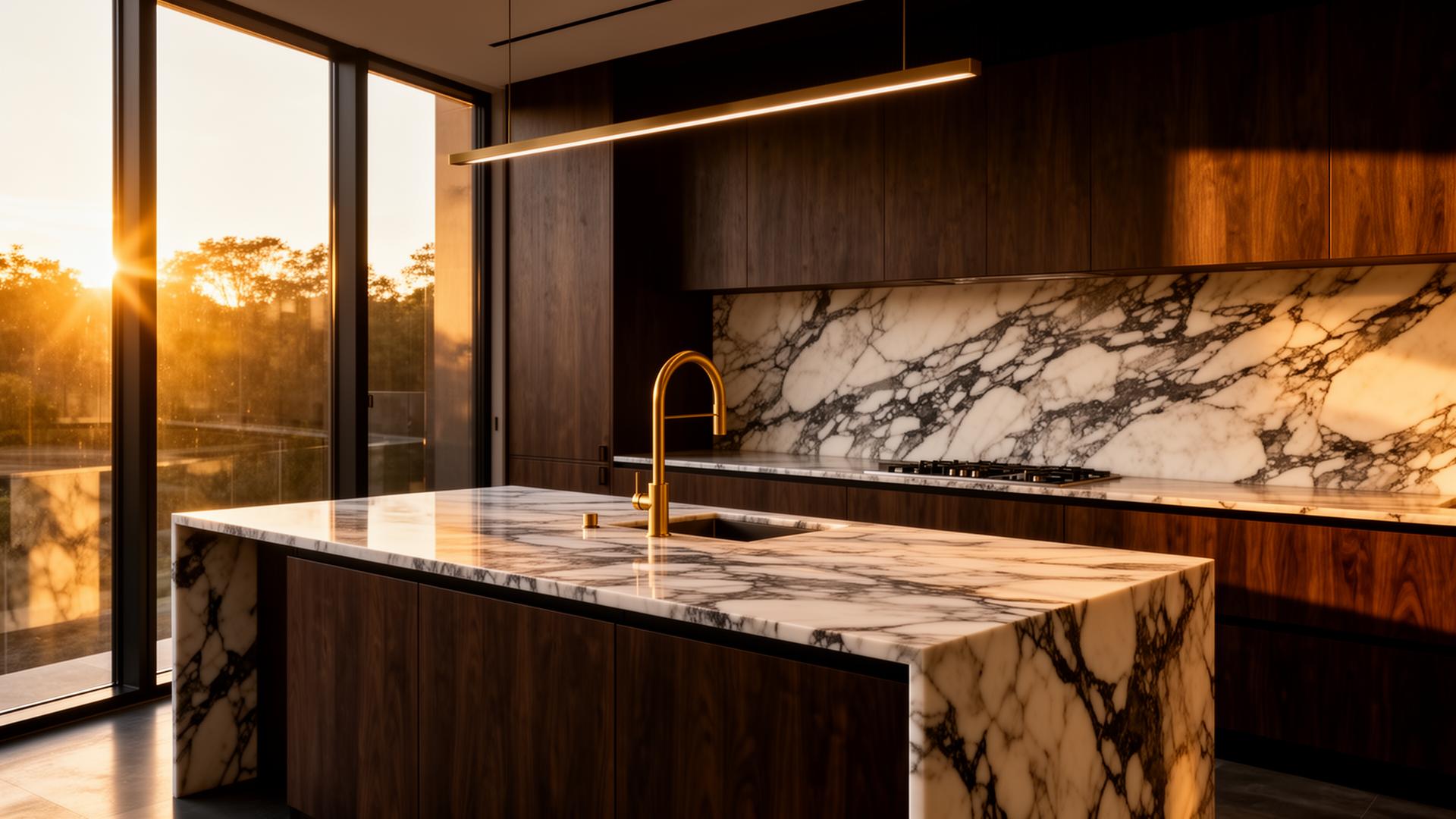
There is no universal best marble. The right stone depends on the room’s light, the cabinetry tone, and the way the kitchen will be used. Calacatta — with its dramatic, painterly grey veining on a near-white field — remains the most coveted for islands and waterfall edges. Statuario reads quieter; its veining is finer, almost graphite-like, and lends itself to backsplashes that should recede.
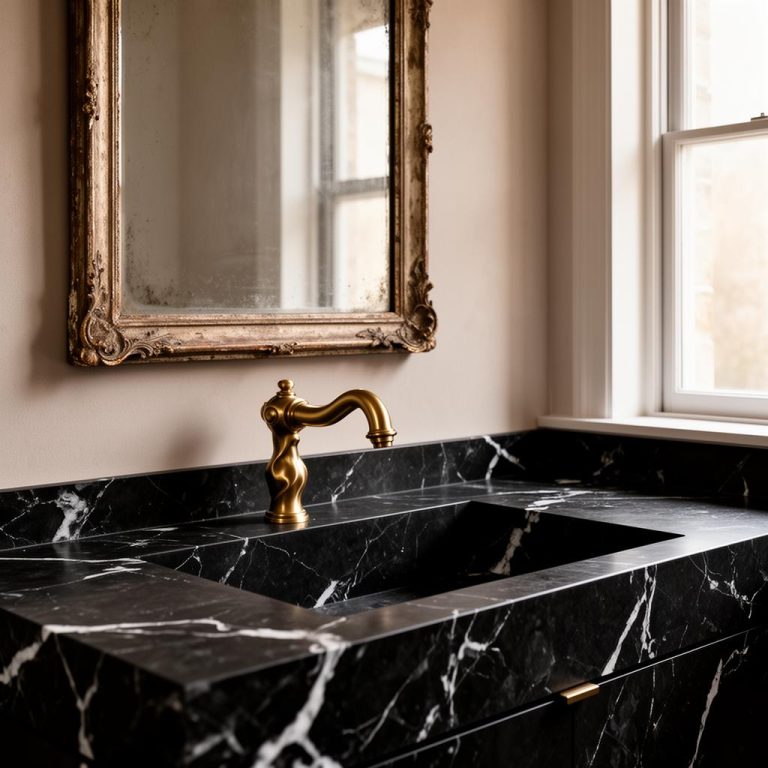
For darker, more sculptural rooms, Nero Marquina and Sahara Noir bring the gravitas of a private library. Patagonia and Calacatta Viola, both bookmatched, can transform an island into a piece of resident art.
Slab Selection and Bookmatching
Always select your slabs in person. Photographs flatten the depth that gives marble its quiet drama. Walk the showroom, hold a sample under natural light, and ask the supplier to lay full slabs on edge so you can read the veining as a continuous composition.
Bookmatching — mirroring two adjacent slabs along their cut edge — produces the symmetrical Rorschach pattern associated with the most ambitious kitchens. It demands extra material and a fabricator who understands the consequence of every millimetre.
Finishes: Polished, Honed, or Leathered
A polished finish maximises the depth of the vein and reflects light, but it shows etching from acidic foods more readily. Honed marble — sanded to a soft matte — is the editorial favourite of the past decade: it reads modern, hides micro-wear, and pairs beautifully with patinated brass. Leathered finishes add a tactile, almost suede quality that suits darker stones.
Designing the Island
The island is the room’s centre of gravity. A waterfall edge — where the slab returns to the floor along the sides — emphasises the stone as object. A simple eased edge keeps the focus on the veining itself. Where possible, let the island be one continuous slab; visible seams disrupt the meditation.
Care, Sealing, and Patina
Marble is a living surface. It will, over time, acquire a patina — small etches, faint rings, soft watermarks — and this is part of its character, not a failure. Seal the stone every twelve to eighteen months, blot acidic spills promptly, and resist the urge to treat the kitchen as a museum. The marble kitchens we revisit decades later are always the ones that were used.