The marble bathroom occupies a singular place in residential design. It is the most private room in a house and, often, the most considered. Done with restraint, it becomes a daily ritual; done excessively, it becomes a hotel. The difference between the two lies almost entirely in the discipline of the material palette.
A Single Stone, From Floor to Ceiling
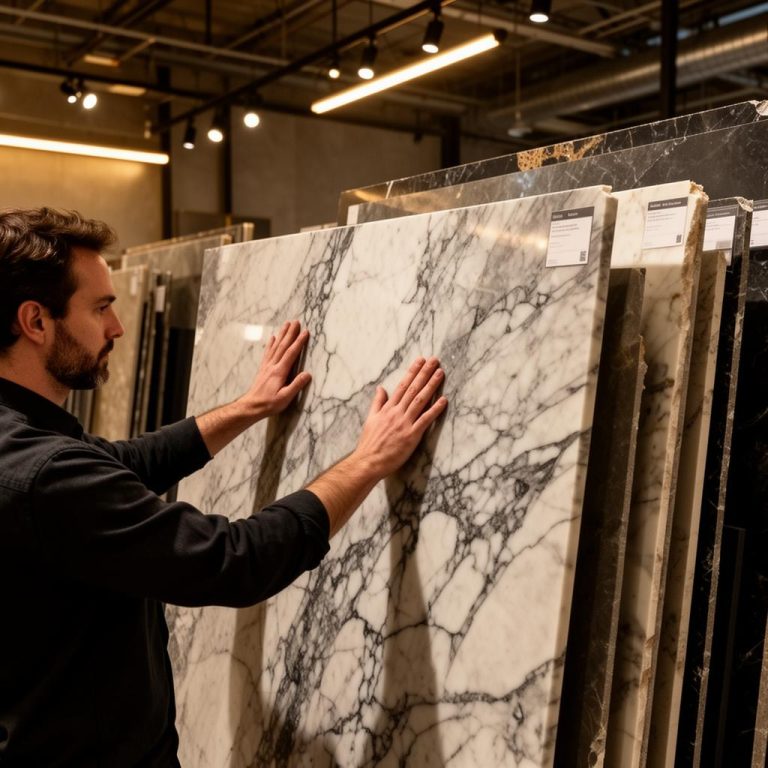
The most arresting marble bathrooms commit to one stone and let it carry the room. Bookmatched slabs running from floor to ceiling — wrapping shower walls, vanity, and floor in a continuous geological event — produce an effect closer to architecture than decoration. The eye reads the room as carved rather than assembled.
The Sculptural Bathtub
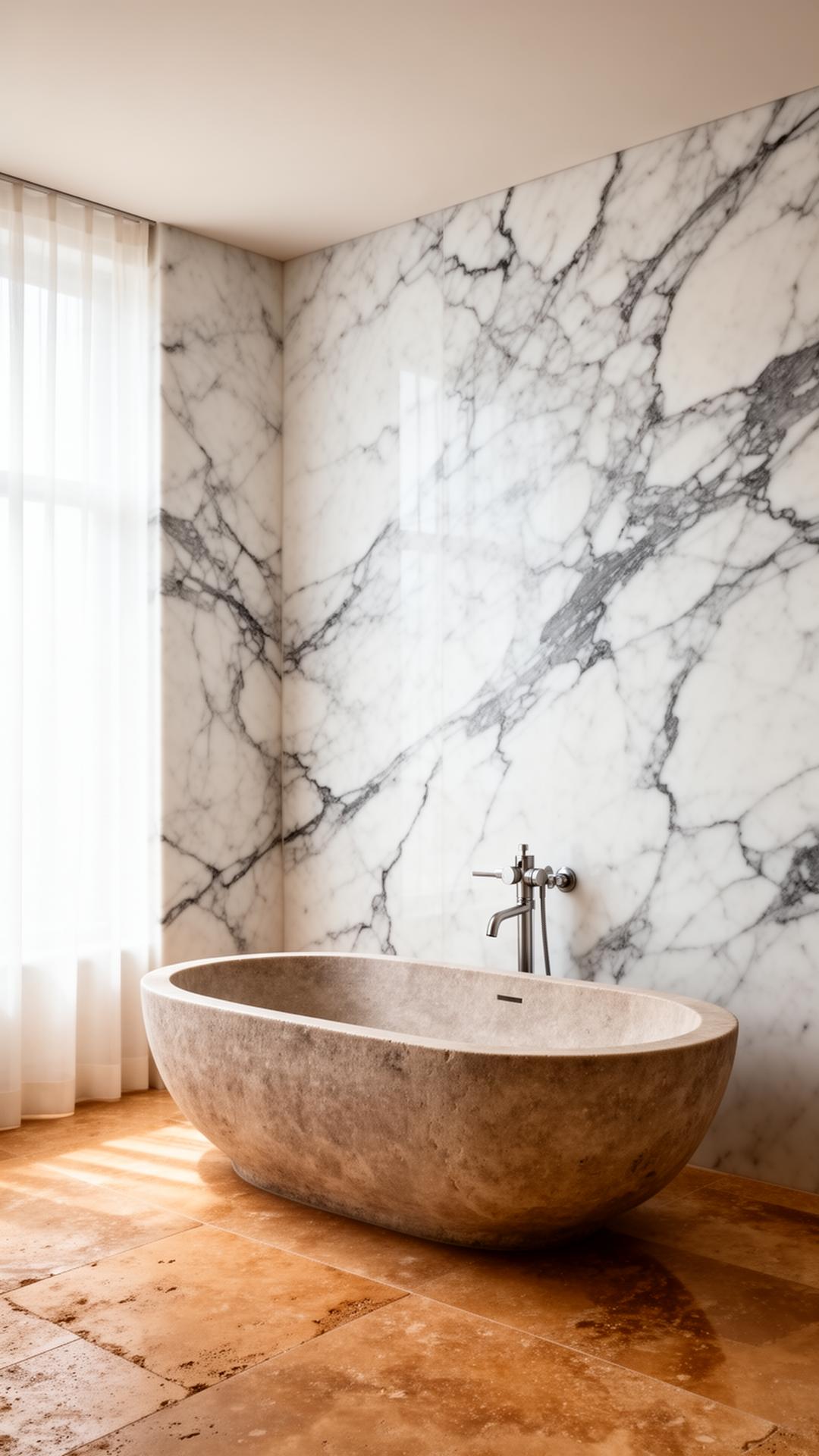
A freestanding tub turned from a single block of stone is the closest a bathroom gets to inhabited sculpture. Travertine and limestone offer warmth; Calacatta and Statuario bring the chill of marble proper. Place the tub where it can read as object — beneath a window, against a quiet wall — never where plumbing requires it to live.
Brass, Patina, and Restraint
Unlacquered brass fittings will patinate naturally with use, deepening into a tone that complements warm-veined marbles. Resist chrome unless the rest of the room is consciously cool. One material decision should always answer to another.
The Wet Room
The wet room — a bathroom without a shower enclosure, where water drains from a gently sloped floor — is the spatial format that allows stone to perform at its best. Without a glass screen interrupting the slab, the bookmatched wall reads as a whole. The floor, the wall, and the ceiling can be the same stone, the same veining flowing between planes as though the room were carved from a single block.
The practical requirements of a wet room are more demanding than a conventional shower: the floor gradient must be precise, the drainage must be positioned correctly relative to the room’s use, and the waterproofing must be applied across the entire floor area. These are not insurmountable problems. They are problems worth solving.
Heating the Stone
Stone bathrooms can read as cold in climate. Underfloor heating, installed beneath the stone, resolves this almost entirely — the surface itself becomes warm to the touch, and the room holds heat in a way that tiled bathrooms do not. The heating system must be designed to accommodate the thermal mass of the stone, which heats and cools more slowly than tile: the system should be on a timer that begins warming the floor well before the bathroom is used.
Heated towel rails in unlacquered brass or blackened steel complete the provision. They should be sized for the number of towels actually used, not for maximum theoretical capacity. A rail that is always half-empty reads as an oversight.