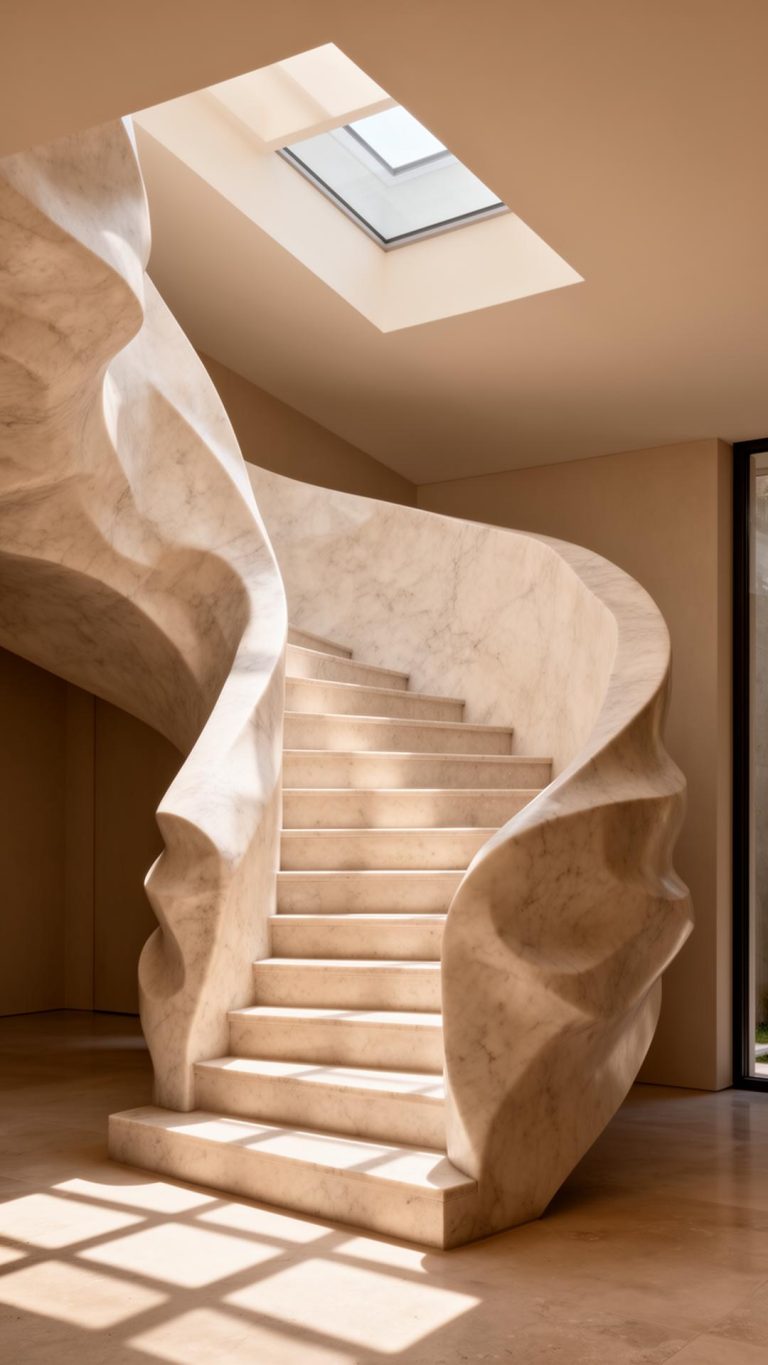
Trend, as a category, sits uneasily with stone. Marble outlives every style it has ever appeared in. Still, the choices being made by the best studios in any given year tell us something about where residential design is heading.
The stones gaining specification in 2026 share certain qualities: warmth over coolness, geological drama over quiet refinement, and a surface character that improves with use rather than degrading from it. There is a move away from the pristine and toward the lived-in — even in materials chosen for their expense.
Patagonia Quartzite
Translucent, dramatically veined, and increasingly difficult to source. Specified almost exclusively for backlit installations, Patagonia quartzite — quarried in Brazil and named for its resemblance to Patagonian storm skies — produces a glow when light passes through it that no other natural stone can replicate.
Its scarcity has made it something of a prestige material, and the best studios are using it carefully: a single backlit panel in a bathroom, a wine cellar wall, a study feature. Used extensively, it reads as theatrical. Used precisely, it reads as extraordinary.
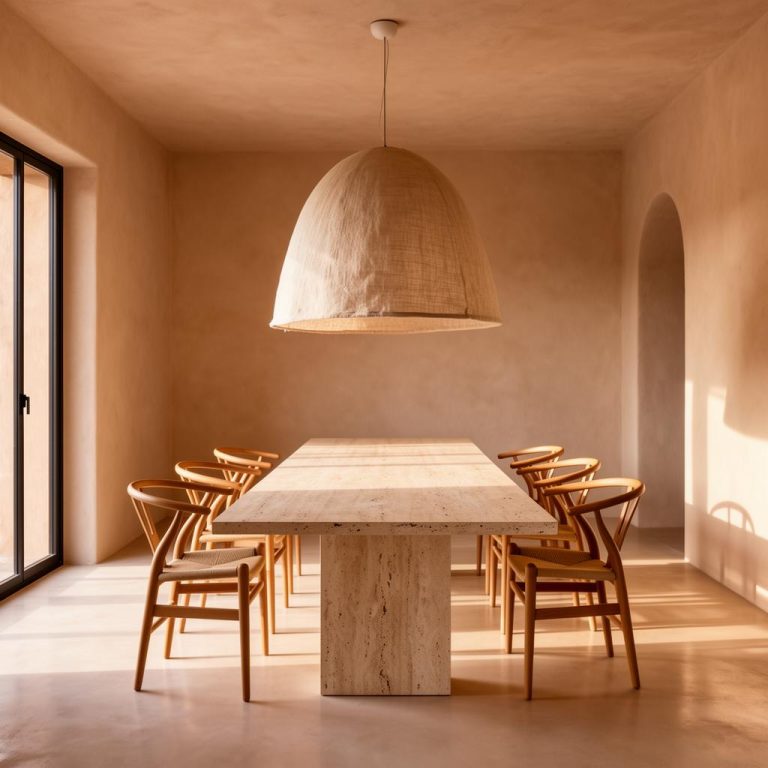
Honed Travertine
The defining surface of the year. Warmer than marble, quieter than limestone, and forgiving in domestic use, honed travertine is appearing across every room type — not as a trend, but as a material that the design community appears to have collectively decided is correct for this moment.
The unfilled variety — where the natural voids and fossil channels are left open rather than grouted — is especially popular in bathrooms and kitchens, where it reads as geological honesty rather than imperfection. It is a surface that asks to be touched, and it rewards the gesture.
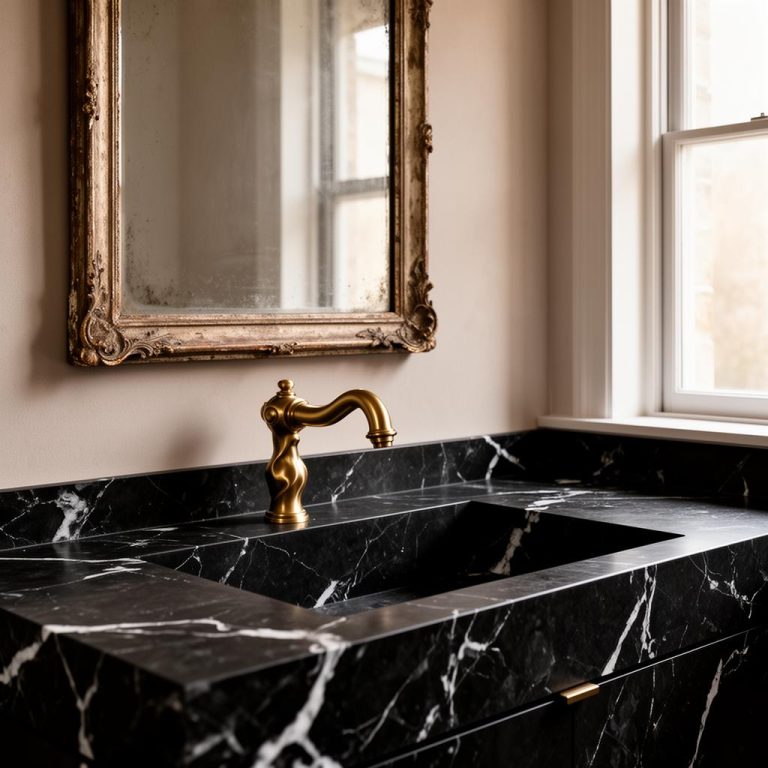
Nero Marquina, Reconsidered
Dark marbles fell from favour in the mid-2010s, displaced by the decade’s obsession with white and light. Nero Marquina — a dense black marble from the Basque Country, threaded with white calcite veins — is coming back. Not in the ways it was used before, as a contrast material in pale kitchens, but as a primary surface: entire bathrooms, kitchen islands, hearths.
Used this way, it has a gravity that lighter stones cannot achieve. Rooms built around Nero Marquina feel considered in a way that white marble rooms rarely do. The white veining, seen at scale across a bookmatched wall, becomes a kind of drawing — precise, geological, unrepeatable.
Calacatta Viola
Supply constraints have made Calacatta Viola one of the most sought-after stones in the world, and the studios who can get it are using it with appropriate reverence. The violet veining — the result of iron oxide deposits formed across two hundred million years — has no equivalent in any other marble, and the warmth it brings to a room is unlike anything achievable with cooler white stones.
The studios specifying it most successfully are treating it as the room’s singular gesture. A single bookmatched island, a single bathroom wall. Everything else recedes. Everything else earns its quietness by supporting the stone.