Livia Andersen designs slowly. Her studio releases two or three completed residences a year, and each one bears the recognisable trace of her hand: a single dominant stone, joinery cut to architectural rather than decorative tolerances, and a near-religious commitment to natural light.
We met her at her studio in Nørrebro, where she was midway through specifying slabs for a private residence outside Aarhus. The studio itself is a demonstration of the principles she articulates: bare concrete floors, a single long work table in pale oak, and one wall given entirely to stacked stone samples organised not by colour but by quarry of origin.
On Material Selection
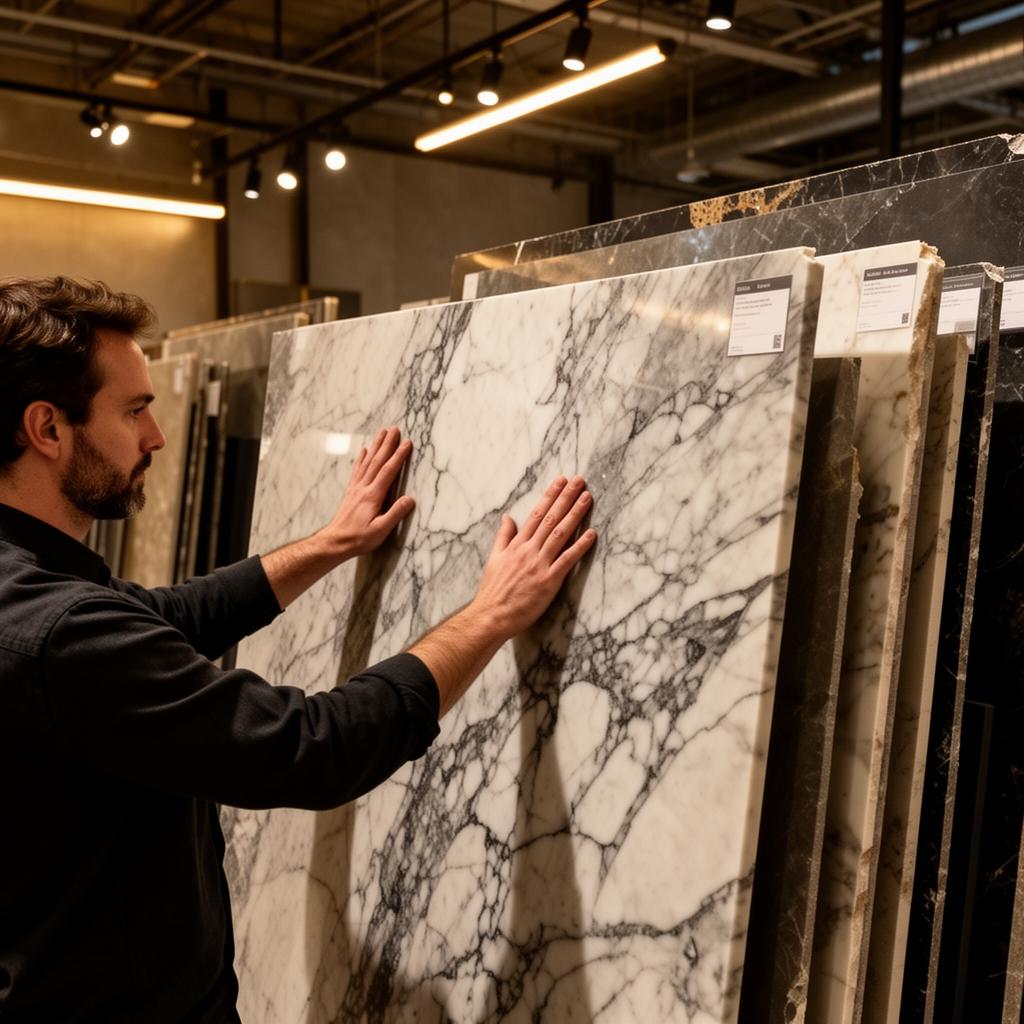
“I never choose a material from a sample chip,” she says. “I go to the quarry, or I go to the yard, and I look at the slab the way I would look at a painting. If it does not move me there, it will not move anyone in the finished house.”
She pulls a sample of Pietra di Cardoso from the wall — a dark, almost charcoal stone quarried near Lucca. “This is what I am working with on the Aarhus project. The clients wanted something Scandinavian, something restrained. And I showed them this and said: restraint does not mean pale. It means decided. This stone is completely decided.”
On the Brief
Andersen’s intake process is unusual. She meets with clients four times before accepting a project, and the conversations are rarely about aesthetics. She asks about how the family moves through the house on a Tuesday morning. She asks what the first thing they do when they arrive home is. She asks what they find intolerable about the house they currently live in.
“The brief is always hidden inside the complaints,” she says. “Someone says they hate their kitchen because it’s always messy. What they’re really telling me is that they want a kitchen that imposes discipline — a single surface, no visual noise, nowhere to pile things. That is a stone kitchen. That is a specific stone kitchen. The brief writes itself.”
On Natural Light
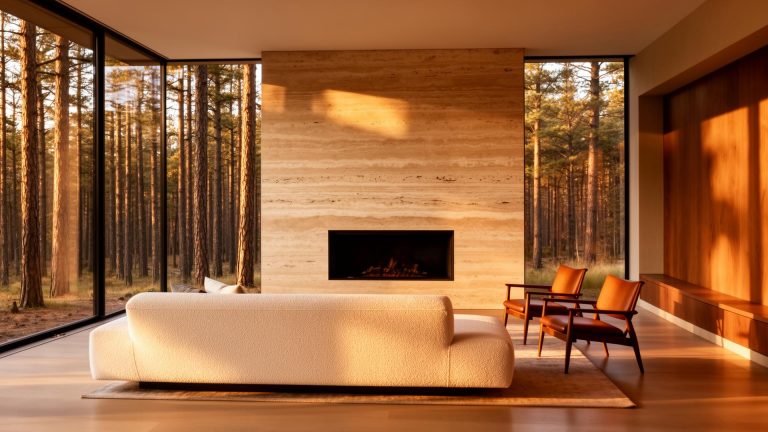
Every Andersen project is mapped for light before a single material is specified. She commissions solar studies for each room, tracking the movement of light across floors and walls through each season. Stone is then selected partly for how it performs in the available light — a north-facing room requires a warmer stone; a south-facing room can hold something cooler and more dramatic.
“Marble changes completely depending on where the light comes from,” she says. “A Calacatta that looks spectacular under a skylight will look flat and grey under a north window. I have seen beautiful slabs destroyed by bad orientation. It is the most common mistake in residential stone work, and almost nobody talks about it.”
On Finishing
Asked about the current preference for honed and leathered finishes over polished, Andersen is characteristically direct. “Polished marble is not wrong. It was right for a long time, and it is still right in certain contexts — very formal rooms, very traditional architecture. But we have moved into a period of domestic life where formality feels uncomfortable. People want their houses to feel inhabited, not preserved.”
“Honed stone allows that. It shows use without showing damage. It patinates in a way that polished stone does not — polished stone either stays perfect or gets scratched. Honed stone just becomes more itself over time. That is what I want from a material in a house.”