For most of the past century, the bathroom vanity was a piece of joinery — built in, finished to match the cabinetry elsewhere in the house, and largely invisible. The most interesting bathrooms today are inverting that convention. The vanity is being treated as an object: standalone, sculptural, often the only piece of furniture in the room.
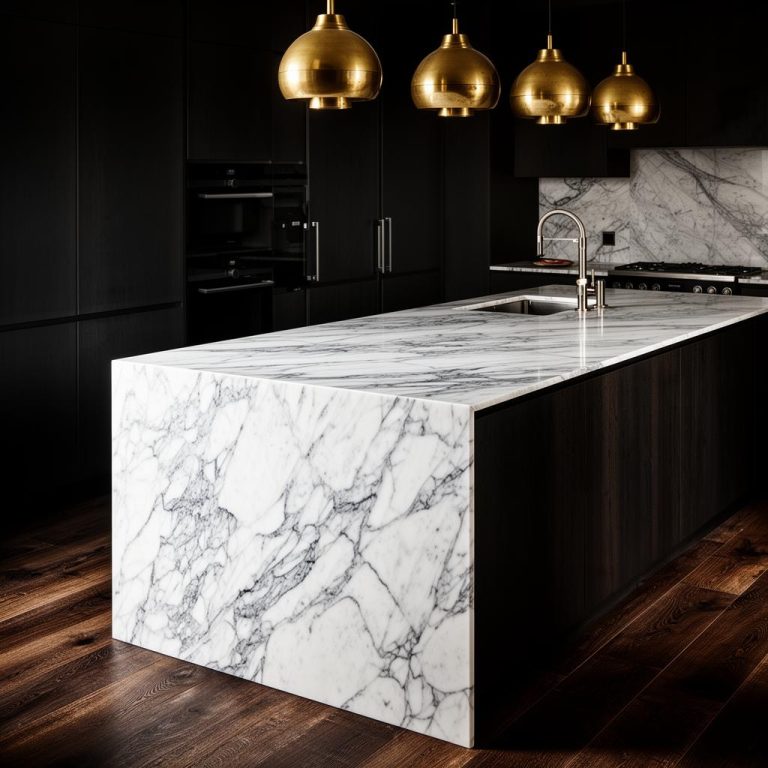
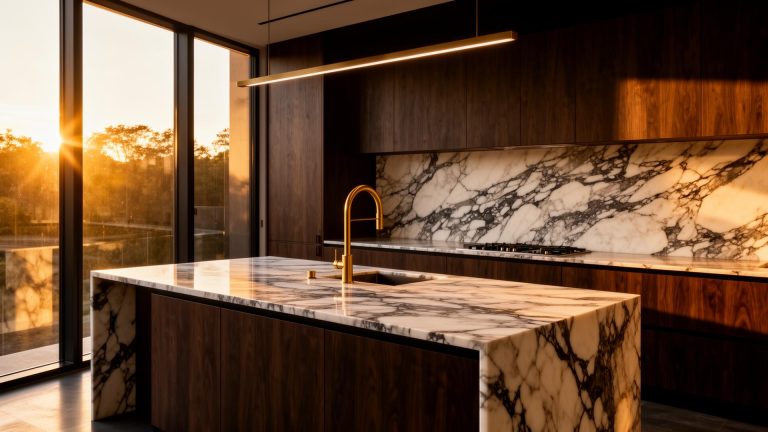
This shift is partly material. Stone vanities — turned from a single block, or constructed from slabs with a cantilevered basin carved directly into the surface — have a presence that timber joinery never achieves. They read as found rather than built. They suggest permanence.
The Case for Stone
A stone vanity unit communicates something that no amount of clever joinery can approximate: weight. The sense that the object has always been here, and will remain long after everything else in the room has been replaced. This is not merely an aesthetic quality. It changes how a bathroom feels to inhabit — more spa, less utility room.
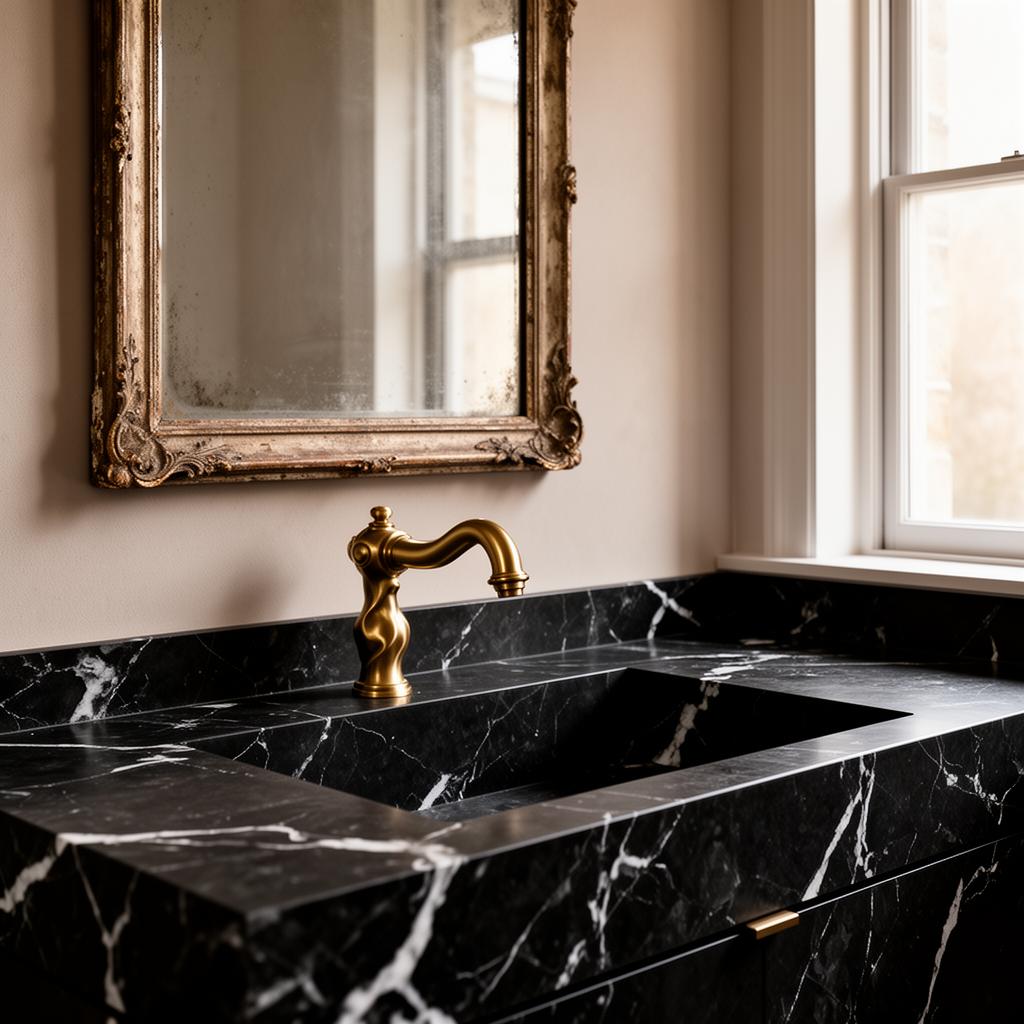
Nero Marquina — a dense, near-black marble from the Basque Country — is among the most dramatic choices for a freestanding vanity. Against white or pale plaster walls, it reads as pure object. The basin is typically carved as an integral part of the slab, the drainage concealed within the stone itself. Unlacquered brass fittings are the only hardware that matches the material’s seriousness.
Proportion and Placement
The freestanding vanity works best when it is given space to be seen. Pushed into a corner, flanked by storage on both sides, it loses the quality of objecthood that justifies the expense. The most successful installations treat the vanity as they would a sculpture: placed where it can be read from multiple angles, with enough clear floor around it to suggest intention.
Height matters more than most designers acknowledge. A vanity cut too low — at the traditional 85 centimetres — reads as a surface. At 90 or 92 centimetres, it begins to read as architecture. The slightly elevated position changes the posture of using it and, subtly, the feeling of the room.
Beyond the Basin
The storage question is the main objection to the freestanding stone vanity. Where does everything go? The honest answer is that these bathrooms work best when there is genuinely less to store. Toiletries in a cupboard elsewhere. A single bar of soap on the stone surface. One glass, one candle. The material demands a certain editing of the life lived around it.
For those who need more storage, the solution is a separate piece — a medicine cabinet with some depth to it, or a freestanding timber unit positioned at distance from the vanity itself. The key is that the storage does not compete with the stone for visual authority.