There is a quiet movement underway in residential kitchens — a return to the monolith. Where the previous decade favoured layered materials, contrasting bases and dramatic mixed-metal fittings, the new ambition is reduction: a single slab, a single tone, a single gesture.
The monolithic island reads architecturally because it behaves architecturally. It anchors the room with mass. It refuses to be styled. It asks the rest of the kitchen — cabinetry, lighting, hardware — to recede into supporting roles. The result is a space that ages without effort.
Against Decoration
The decorated kitchen is a product of a particular anxiety — the fear that stone alone will not be enough. Designers reach for contrasting waterfall edges in a different material, for open shelving packed with ceramics, for statement pendants that compete with the island for attention. The result is a room that works hard to be noticed and exhausts quickly.
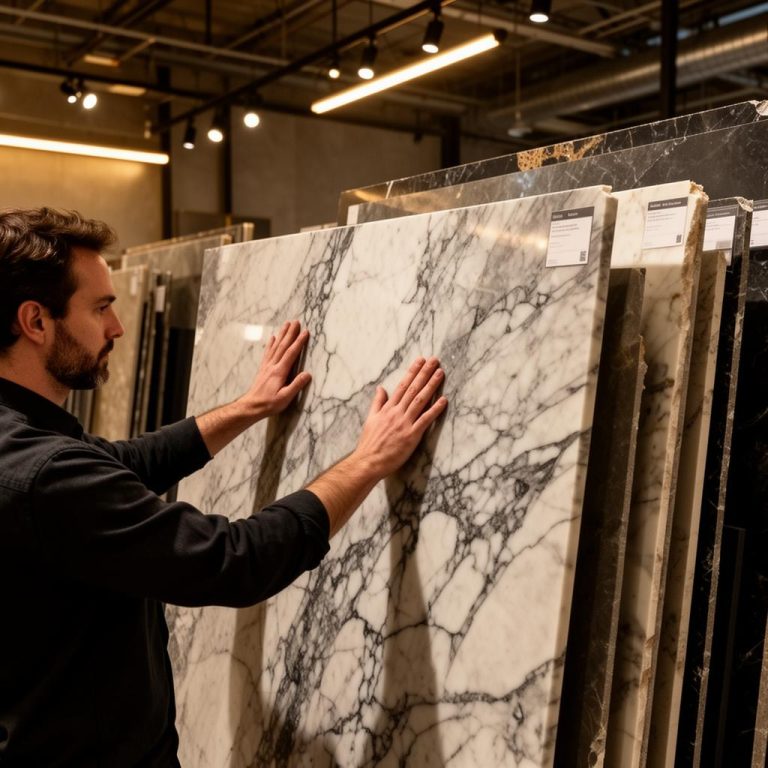
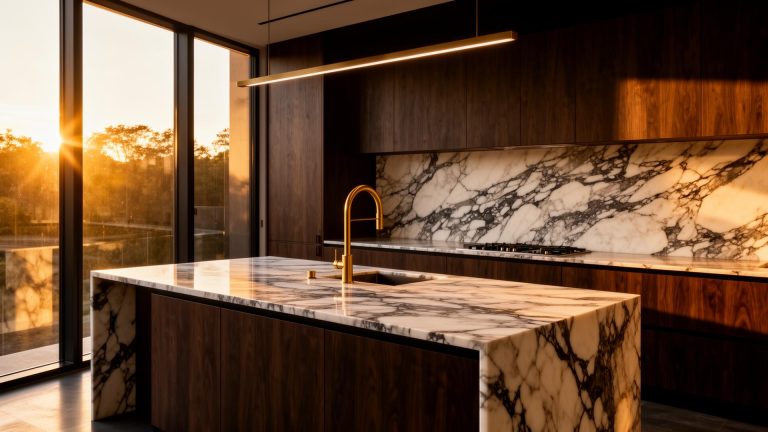
The monolithic island requires a different kind of confidence. It asks the designer to trust that a single extraordinary slab of Calacatta, bookmatched and waterfall-edged in the same stone, is more interesting than any amount of layering. In practice, it almost always is. The eye settles, then notices more: the depth of the vein, the warmth of a polished edge catching afternoon light, the geological event compressed into a kitchen surface.
On Proportion
The monolithic island demands to be scaled correctly. Too small and it reads as a slab dropped into the room; too large and it becomes oppressive. The right proportion is one where the island could plausibly have been quarried as a single object — where the dimensions feel inevitable rather than designed.
Most of the successful monolithic islands published this year fall between 2.8 and 3.6 metres in length. Below 2.8, the waterfall edge begins to feel narrow. Above 3.6, the fabrication typically requires a seam, and a visible seam on a monolithic island is a contradiction in terms. Where a seam is unavoidable — in very long kitchens — the best fabricators place it at the point of least visual activity, aligned with the least dramatic part of the veining.
The Waterfall Edge
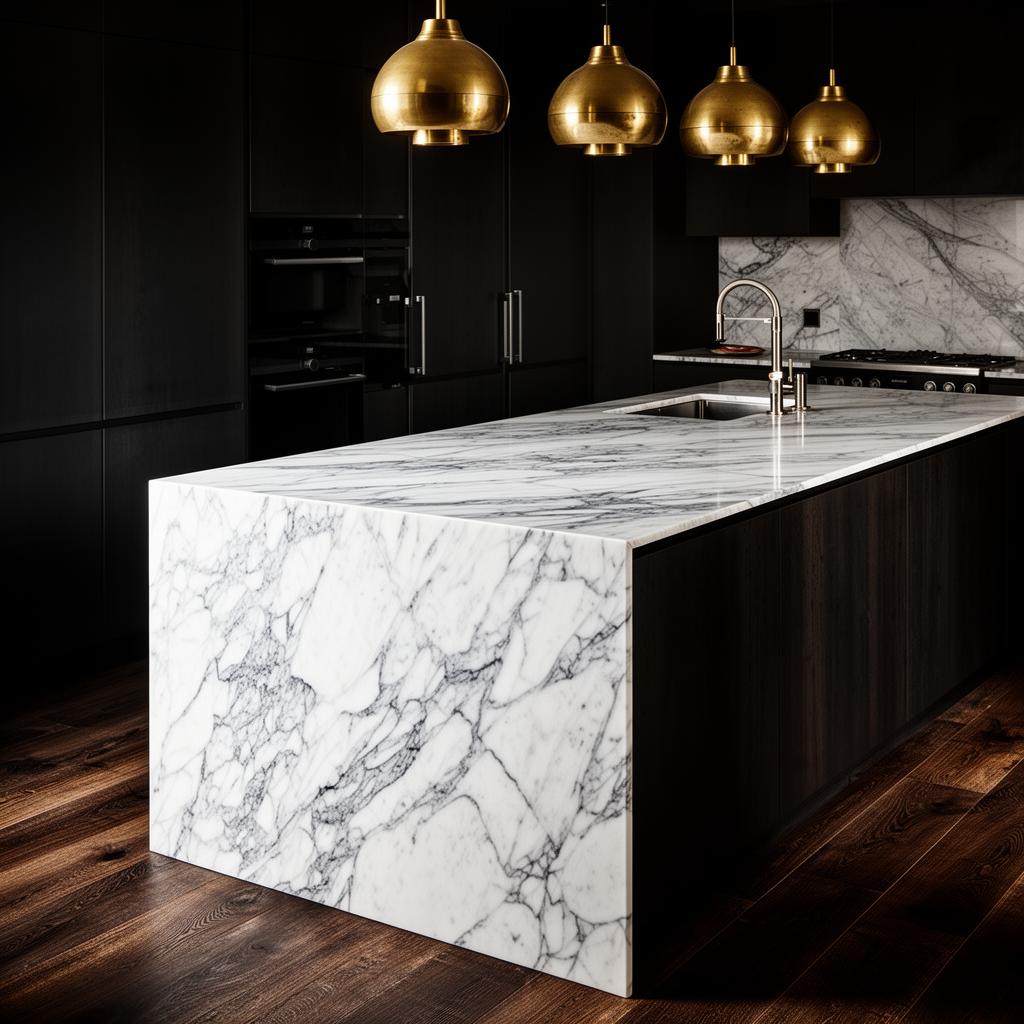
The waterfall edge — where the slab returns to the floor along the short ends — is the defining detail of the monolithic island. Done well, it implies that the island is carved from a solid block rather than constructed from a surface laid over a base. The stone appears continuous, structural, self-supporting.
Achieving this illusion requires a mitre joint at the corner, cut at exactly 45 degrees and matched for veining. The joint line should be as invisible as possible. Where the veining is dramatic — as it is in Calacatta Viola or Patagonia quartzite — mitre-matching becomes the most technically demanding part of the entire fabrication. It is also the detail that separates a competent stone shop from an exceptional one.